Why Choose Sattvic?
Discover how the ancient science of sattvic eating transforms not just your body, but your mind, energy, and spiritual consciousness.
The Foundation
What is Sattvic Food?
The word sattva comes from Sanskrit, meaning "purity," "truth," and "goodness." In Ayurvedic and yogic philosophy, all of existence is composed of three fundamental qualities called the gunas: sattva, rajas, and tamas.
Sattvic food is that which promotes the quality of sattva in the mind and body — clarity, peace, lightness, and spiritual awareness. The Bhagavad Gita (17:8) describes sattvic foods as those that "increase life, intelligence, strength, health, happiness, and cheerfulness."
Unlike a mere dietary system, sattvic eating is a complete philosophy of conscious nourishment — considering not just what we eat, but how food is grown, prepared, and consumed.
"Of all the yogic rules and regulations, the best one is taking of sattvic foods in moderate quantities."
— Sri Ramana Maharshi
Vedic Science
The Three Gunas of Food
Every food carries a quality (guna) that influences our consciousness. Understanding the three gunas helps us make choices that support our highest potential.
Sattvic foods promote clarity, peace, and spiritual awareness. They are fresh, light, and nourishing — the ideal diet for yogis, meditators, and spiritual seekers.
Sattvic Foods
- Fresh fruits & vegetables
- Whole grains (rice, oats, quinoa)
- Legumes (mung dal, chickpeas)
- Nuts & seeds
- Dairy (milk, ghee, paneer)
- Mild spices (turmeric, cumin, coriander)
- Honey & natural sweeteners
Rajasic foods stimulate the mind and body, creating restlessness, agitation, and desire. Suitable in moderation for active lifestyles but not ideal for meditation.
Rajasic Foods
- Onion & garlic
- Hot spices & chili
- Coffee & tea
- Pickles & fermented foods
- Fried foods
- Refined sugar
Tamasic foods create dullness, lethargy, and clouded thinking. They should be minimized or avoided for those seeking clarity and spiritual growth.
Tamasic Foods
- Meat, fish & eggs
- Alcohol
- Stale or reheated food
- Processed & packaged foods
- Overeating of any kind
Proven Benefits
How Sattvic Eating Transforms You
Enhanced Mental Clarity & Focus
Sattvic foods are light and easily digestible, freeing up energy for mental processes. Studies show plant-based diets reduce brain fog and improve cognitive function. The absence of stimulants like caffeine and alcohol creates a stable, clear mental state ideal for meditation and deep work.
Cardiovascular & Digestive Health
A diet rich in fresh fruits, vegetables, whole grains, and legumes provides fiber, antioxidants, and anti-inflammatory compounds. Spices like turmeric (curcumin) have been shown to reduce inflammation markers. Ghee supports the digestive fire (agni) and lubricates the intestinal tract.
Sustained Energy Without Crashes
Sattvic foods have a low glycemic impact, providing steady energy without the spikes and crashes of processed foods. Complex carbohydrates from whole grains and legumes fuel the body and brain for hours. Many practitioners report feeling lighter and more energetic.
Spiritual & Emotional Wellbeing
The Bhagavad Gita teaches that sattvic food directly influences our state of consciousness. Practitioners consistently report greater emotional stability, reduced anxiety, deeper meditation, and a natural inclination toward compassion, gratitude, and inner peace.
Cultural Wisdom
Sattvic Traditions Across Asia
The principles of sattvic eating are not unique to India — every Asian culture has its own tradition of pure, plant-based, spiritually conscious cooking.
Indian
The birthplace of sattvic cooking. Kitchari, dal, sabzi, and rice form the foundation of the most complete sattvic cuisine in the world.
Japanese
Shojin ryori (Buddhist temple cuisine) is Japan's ancient sattvic tradition — pure, seasonal, and mindfully prepared.
Thai
Thai cuisine's aromatic herbs, coconut milk, and fresh vegetables align beautifully with sattvic principles when adapted without fish sauce.
Chinese
Chinese Buddhist vegetarian cuisine (素食, sùshí) has a 2,000-year tradition of pure, plant-based cooking that mirrors sattvic principles.
Korean
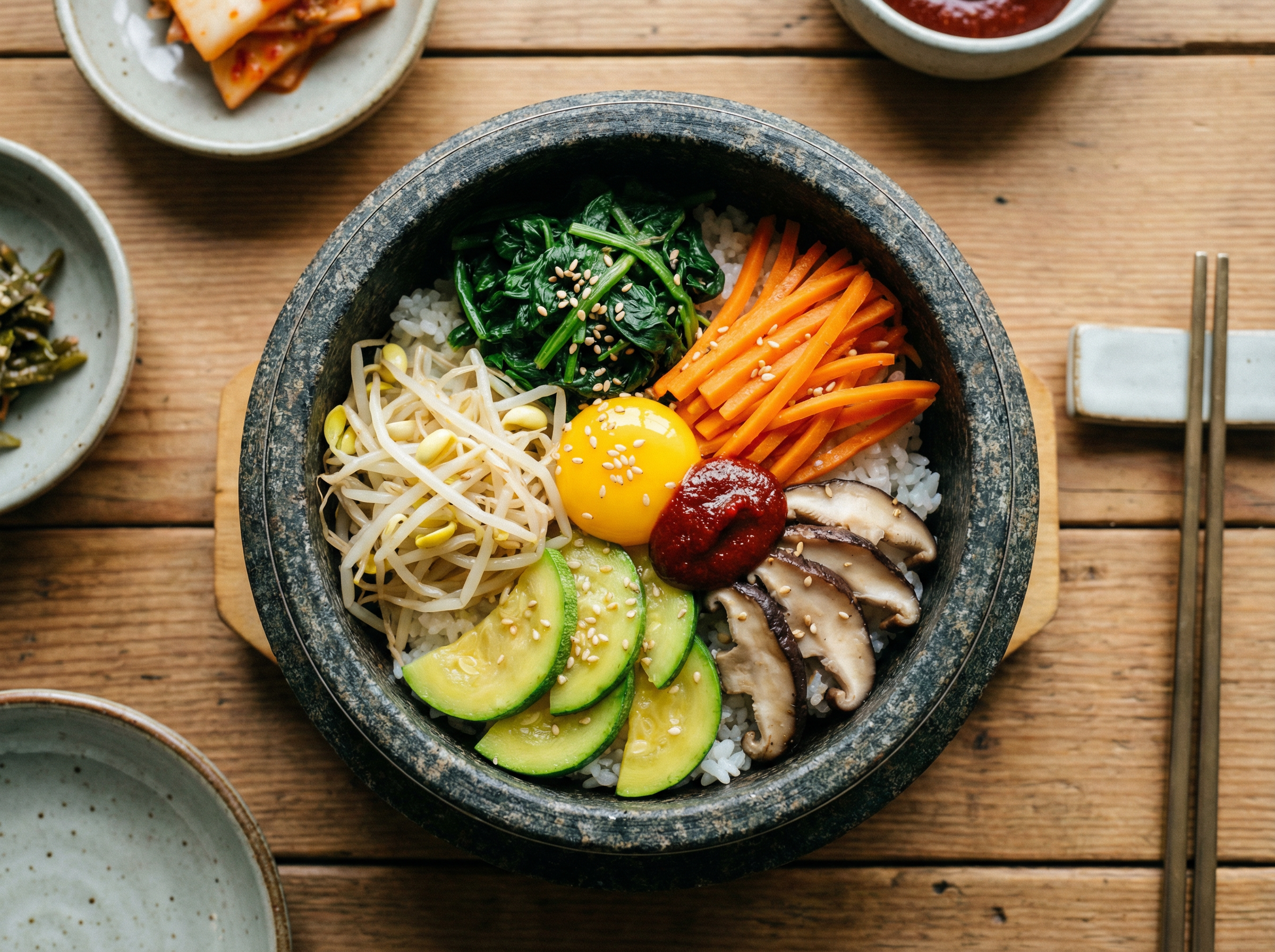
Temple food (사찰음식) is Korea's sattvic tradition — no meat, no onion, no garlic, focused on seasonal vegetables and fermented foods.
Vietnamese
Vietnamese Buddhist vegetarian cuisine (ăn chay) is widely practiced and creates beautiful, aromatic dishes without animal products.
Ready to Begin Your Sattvic Journey?
Explore our collection of authentic Asian sattvic recipes, plan your week with the meal planner, and discover the transformative power of conscious cooking.